
Project Description
Jaime Collyer
Chile
Jaime Collyer, born in Santiago de Chile in 1955, is a prominent Chilean psychologist and writer. He has been recognized as one of the forerunners of the New Chilean Narrative, focusing on changes and disruptions in modern societies, with works such as THE INFILTRATOR, which won the Grinzane Cavour Prize and the Altazor Prize. Three volumes of short stories were awarded the Santiago Municipal Prize, and for SWINGERS he received the Chilean Academy of Language Prize.
Collyer lived in Spain and translated authors such as Shakespeare and John Donne into Spanish. After the Pinochet dictatorship, he returned to Chile, where he now teaches literature and creative writing at the university ‘Diego Portales’ in Santiago.
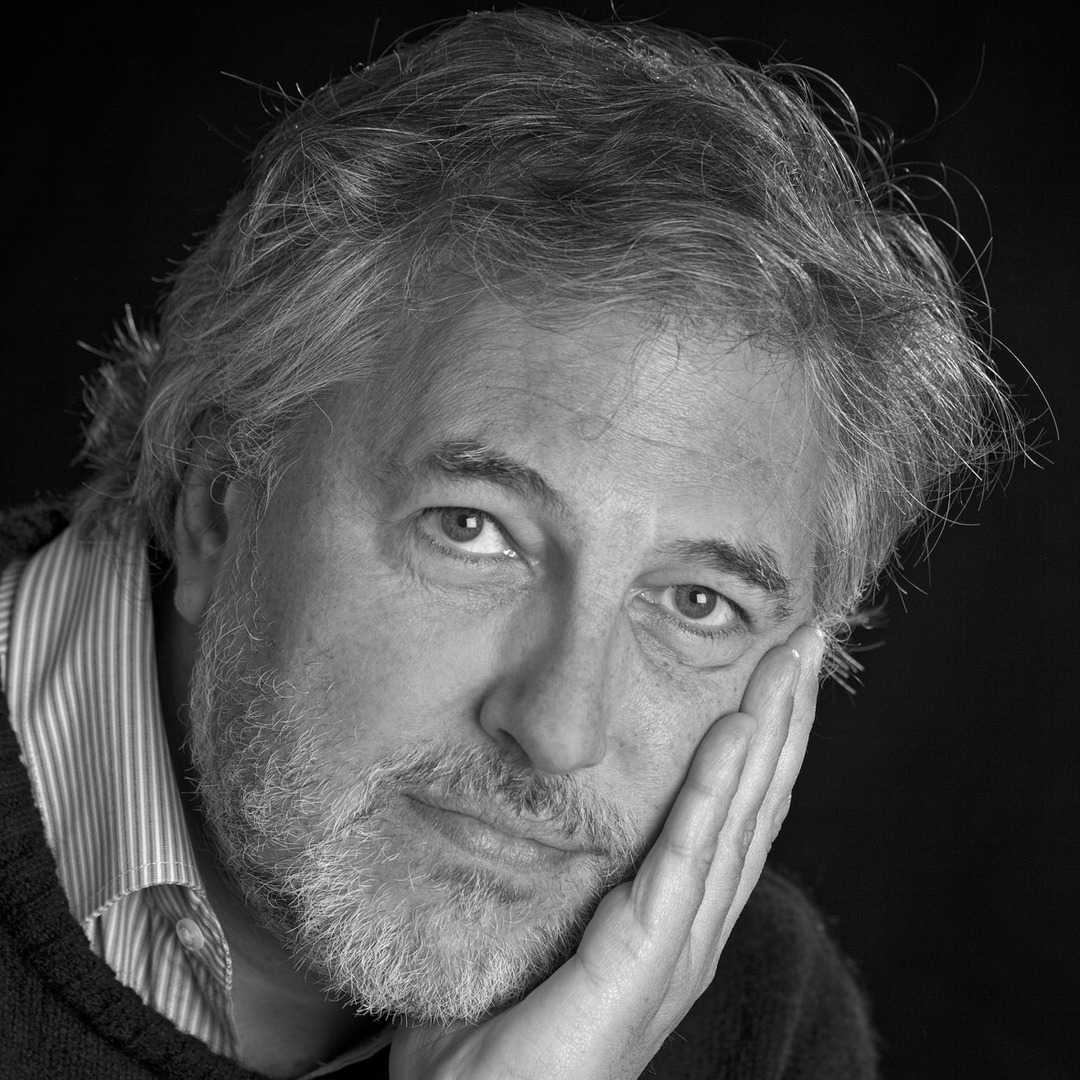 © Ernesto Merino A.
//
Water That You Should Not Drink
In Water That You Should Not Drink (“Agua que no has de beber”), Lucas Rovira stares at the hand protruding from the ice in front of him. For years, the Chilean glaciologist has been studying glacier melt on the Kururu volcano in the Bolivian Andes. For the inhabitants of the village of the same name, global warming is a reality that directly threatens their livelihoods. For some time now, mining operations by a Belgian mining company have further accelerated the melting of the glacier. When, one day, the receding ice reveals a well-preserved corpse and shortly afterwards more dead bodies, memories of past guerrilla struggles resurface; a conflict erupts between the indigenous villagers and the Bolivian authorities, gradually escalating.
While the project manager of the mining company ruthlessly pursues his interests and supports the military’s brutal actions, Rovira—together with the young anthropologist Adriana, who is living in the village for research purposes—takes the side of the villagers. For both scientists, their growing bond with the local people goes hand in hand with a gradual estrangement from their partners living far away in La Paz and Santiago.
//
People in the Shadow
In 2005, an unclaimed attack took place in Santiago against a retired colonel in the Chilean army who had been implicated in serious human rights violations during the dictatorship. The incident left the colonel in a vegetative state. The novel’s plot goes back six months before the attack to recount a project to transform a former detention centre into a memorial. A young architect, Svetlana Braun, and a historian and writer, Álvaro Larrondo, are in charge of the project to refurbish the torture centre. To carry out his research, Larrondo needs to contact some survivors and also the retired colonel, as he was in charge of the detention centre.
People in the Shadow (“Gente en las sombras”) depicts the interactions between Larrondo, Prada, Svetlana and other characters, while offering a profound exploration of the theme of political violence and the deeply personal – and, of course, illegitimate – justifications for state terrorism.
It also explores the responsibility of what has come to be known as the regime’s ‘civil wing’: those sections of the bourgeoisie involved in the repression, the masterminds behind the crimes committed, the direct beneficiaries of these crimes, and passive collaborators in the cruelty of that time, all of whom managed to evade accountability for their complicity in the events and to present a selective account of their involvement in them.
RIGHTS
In collaboration with LOM Ediciones, Chile
NOVELS
Water That You Should Not Drink (“Agua que no has de beber”)
Santiago de Chile: LOM Ediciones 2024, 236 p.
German: Secession · Indonesia: Marjin Kiri
People in the Shadow (“Gente en las sombras”)
Santiago de Chile: LOM Ediciones 2020, 202 p.