
Project Description
Verónica Estay Stange
Chile / Mexico / France
Verónica Estay Stange holds a PhD in French language and literature, with postdoctoral research in contemporary art. A lecturer at the Paris Institute of Political Studies, she is the editor of fourteen collective volumes, as well as the author of four single-authored books and fifty articles focusing, on the one hand, on the history of art and literature, and on the other, on dictatorial memory and its transmission across generations.
As the daughter of survivors, she is Vice President of the Association of Former Chilean Political Prisoners in France, and at the same time, as the niece of a perpetrator of crimes against humanity, she is President of the collective Disobedient Stories–Chile. Relatives of Genocidaires for Memory, Truth, and Justice, which she helped to found.
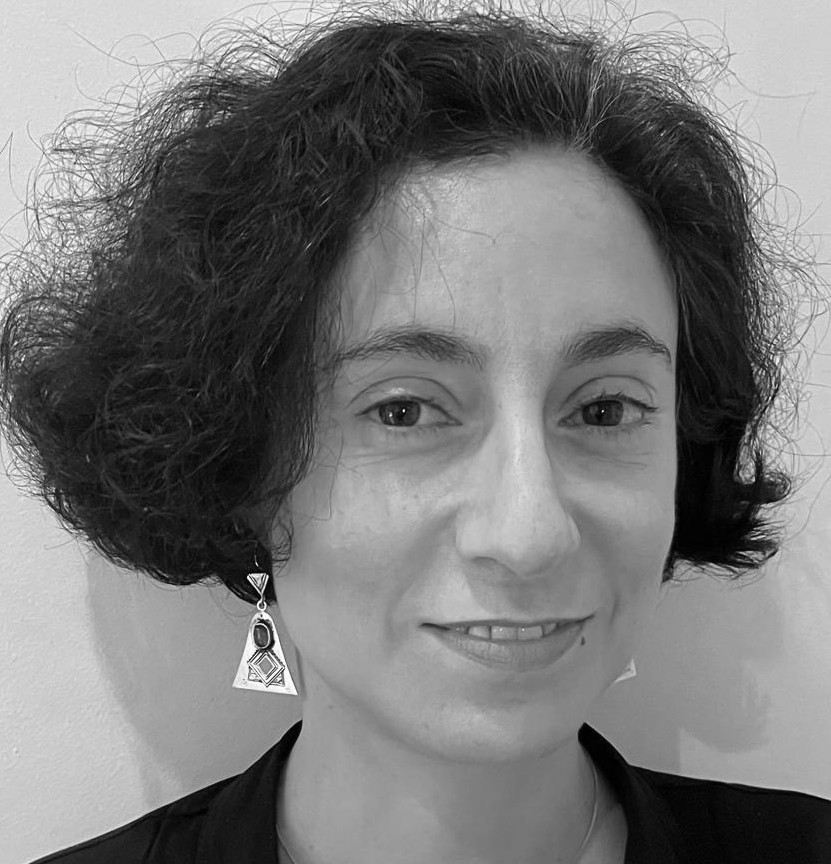 © Private
//
The Hangover of Memory
Straddling the testimonial narrative and essay, The Hangover of Memory (“La resaca de la memoria”) tells the story of a character referred to as “I.” An “I” in the third person who, belonging to the second generation of Chile’s dictatorship, is permeated by the memories of others and by the traces of a receding memory. The book’s title, The Hangover of Memory, reflects this phenomenon and points to the double meaning of the word “hangover”: the debris left behind by ocean waves, and the malaise one wakes up with (or, in this case, is born into) the day after intoxication.
The daughter of survivors who sought refuge in Mexico, “I” extends the exile in France, as if fleeing a tragic family destiny. Indeed, “I” is also the niece of Miguel Estay, alias El Fanta: one of the most emblematic and controversial perpetrators of the dictatorial period. Sentenced to life imprisonment for crimes against humanity, this former left-wing militant betrayed dozens of members of the Communist Party, and ultimately participated voluntarily in one of the most atrocious crimes of that era, the so-called “Case of the Throats Slashed.”
“I,” the daughter of victims, explores the remnants of imprisonment, torture, and exile clinging to her skin, trying to identify everything that binds her to the other “stragglers of memory” of her generation. “I,” the perpetrator’s niece, delves into that other grim zone of History, asking what part of that legacy belongs to her and how to confront it from an ethical and political standpoint. In search of her family past, the character thus embarks on an adventure: she returns to Chile, joins the 2019 social uprising, meets other descendants of genocidaires, co-founds a collective with them, encounters some of her uncle’s victims, and discovers the existence of an unknown cousin—the daughter of the perpetrator.
To invent one’s own narrative amid secrets, distortions, lies, and unbearable truths: such is the challenge she is confronted with—a challenge as immense as the price to be paid.
//
From Papudo to Hell. Autobiography of Andrés Valenzuela Morales
A country in the throes of dictatorship, a repressive group operating in the shadows: torture, murder, disappearances, clandestine detention centres. And a young soldier, Andrés Valenzuela. Papudo, his village. “Papudo”, his nickname. A young soldier who gradually descended into hell.
One morning, he decides to ‘tell everything, spit it all out, down to the last detail. Even if they come after me. Even if they kill me for deserting.’ ‘It doesn’t really matter: you’re already dead. They stole your soul.’
Andrés Valenzuela was the only agent who, while on active duty, deserted after handing over information to the Vicariate of Solidarity about the structure and extermination practices implemented by the secret organisation of which he was a member. Here is the story of a living dead man. And what happened before: a humble childhood, dreams and fantasies, friends from the neighbourhood, a fisherman father. And what happened after: the strangeness of exile, clandestinity, heartbreak, guilt – always guilt. Many journalists, writers, and filmmakers have endeavoured to tell the story of Papudo, the torturer; Papudo, the murderer; Papudo, the penitent. The story of Papudo, the man, is now told by him.
This book gives voice to Andrés Valenzuela, a deserter from the Air Force Intelligence Service and former operative agent of the Joint Command during the Pinochet dictatorship. Assuming the paradox of someone else’s autobiography, it collects his last and longest testimony, sealed by a letter in his own handwriting. Why did you break down? Why at that moment and not before? Why you and not others?
From Papudo to Hell. Autobiography of Andrés Valenzuela Morales (“De Papudo al infierno. Autobiografía de Andrés Valenzuela Morales”) raises these and other questions.
RIGHTS
NOVELS
The Hangover of Memory (“La resaca de la memoria”)
Santiago de Chile: LOM Ediciones 2023, 210 p.
Recommended on the Translating Chile 2025/26 Longlist (English) and Shortlist (German) by the Foreign Ministry of Chile in collaboration with LITPROM Promoting Global Stories, an initiative of the Frankfurt Book Fair
France: Calmann-Lévy 2023
BIOGRAPHY
From Papudo to Hell. Autobiography of Andrés Valenzuela Morales
(“De Papudo al infierno. Autobiografía de Andrés Valenzuela Morales”)
Santiago de Chile: LOM Ediciones 2024, 212 p.